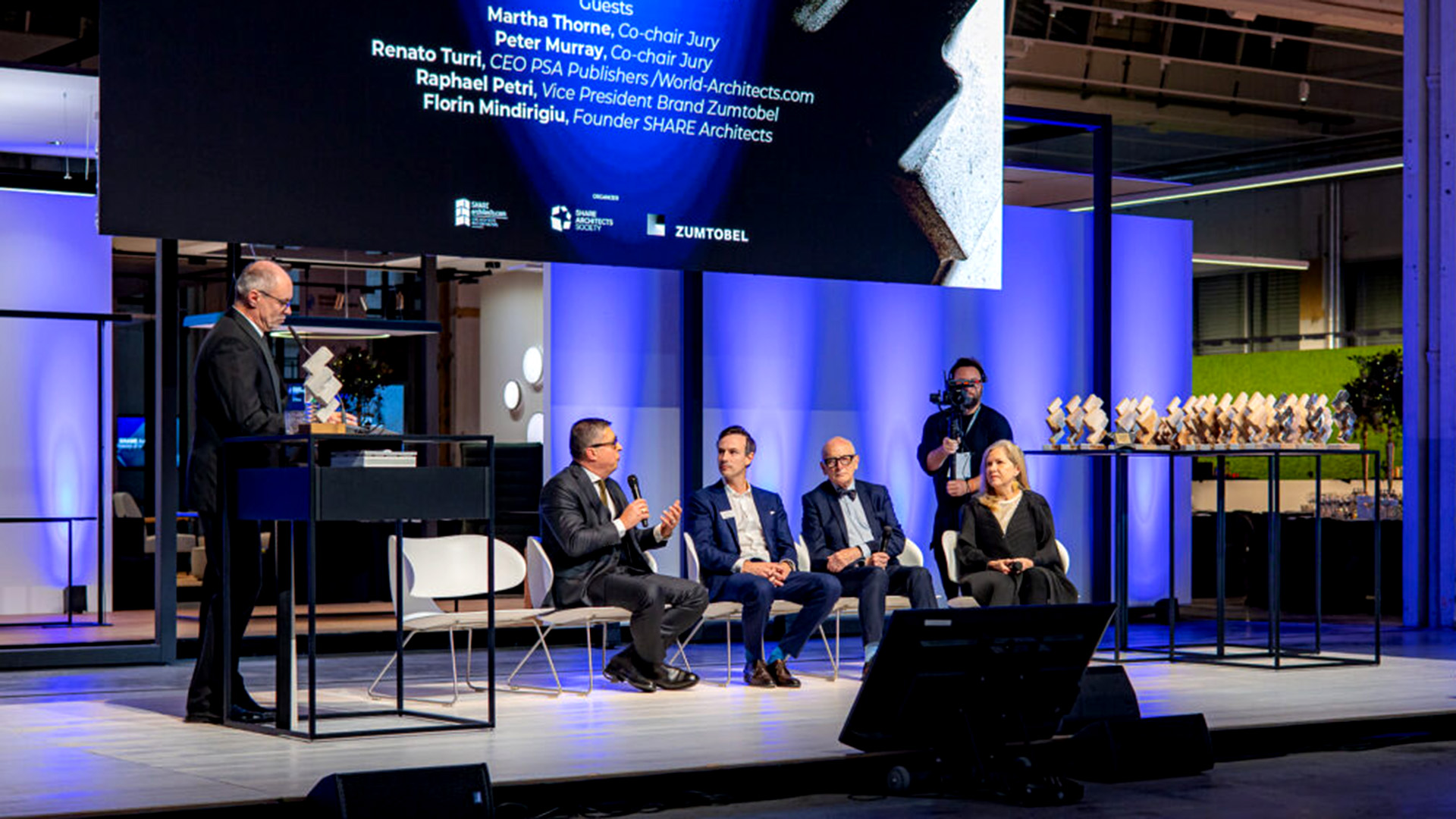
Across the vast and diverse region stretching from Southeast Europe to the Caucasus and Central Asia, the SHARE Architecture Awards are more than a competition. They act as a catalyst for visibility, recognition, and international dialogue, bringing local creative energy into focus and giving architects from these regions a stronger voice in a global architectural conversation that has overlooked them for far too long.
Honouring a profession through awards has become so commonplace that genuine recognition often feels lost in a sea of trophies and PR buzz. There is a real risk that these distinctions will devolve into mere public relations stunts, devoid of substance or any real impact on the community. However, the SHARE Architecture Awards has chosen a different approach, positioning itself as a platform for cultural resilience rather than as a competition in and of itself.
Beyond the rigid hierarchies of rules and jury, the SHARE Architecture Awards also act as a catalyst for a vast, diverse region spanning Southeast Europe, the Caucasus, and Central Asia. If it’s true that often the journey matters more than the destination itself, then these awards are the vehicles. They transform local creativity into an international voice within a global dialogue that, historically speaking, has long ignored these regions.
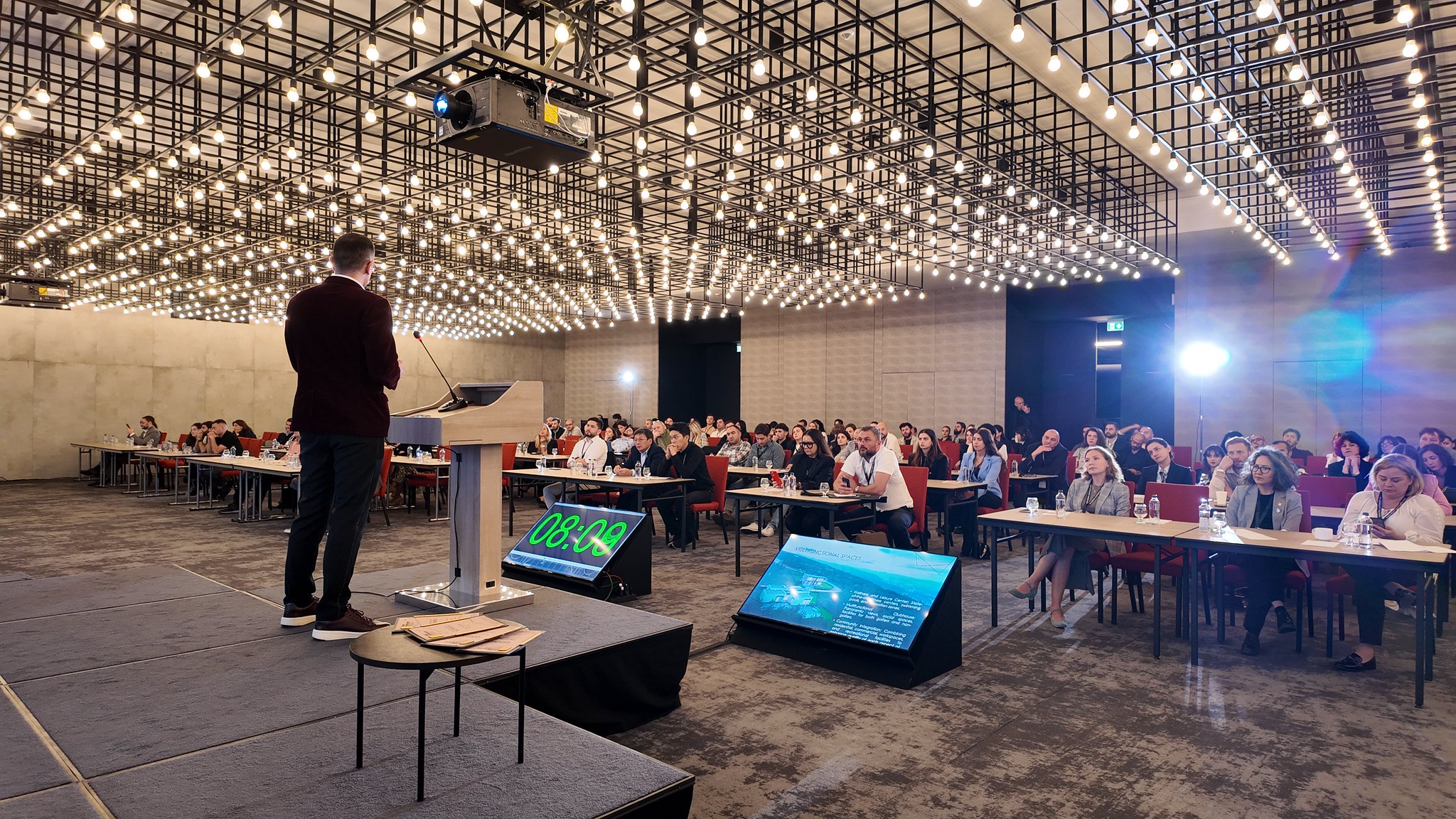
What wasn’t visible on that beautiful stage at the 2025 in Dornbirn on December 4 is that SHARE didn’t emerge overnight as a fully functional behemoth. The program is the product of more than two decades spent refining the way architects connect. While SHARE began with standalone conferences (a model that works really well and deserves the right credits), the urgency to dissolve these national barriers grew. The true paradigm shift occurred at the 2024 event in Athens, where a bold hypothesis was tested. What happens if we stop treating these markets as isolated entities and unite them under a single regional umbrella?
As expected, the event’s success highlighted a need for unity that shattered the notion of the “periphery” in architecture. When projects from countries that fly under the radar (such as Albania, Serbia, Romania, or Georgia) are placed on the same stage, they form a powerful force that draws the West toward the East as a source of inspiration or even a wellspring of innovation and adaptability. This visibility safeguards local architects and designers, ensuring they are no longer confined to the limitations of small, isolated markets. Ultimately, the SHARE Awards serve as a forum where local challenges meet universal solutions are discussed, and where local culture is successfully exported to the global stage.
Four Pillars of Excellence and International Outlook
The SHARE Architecture Awards were conceived as a cultural platform and encourage dialogue between tradition and innovation, heritage and contemporary expression. It also promotes architecture as a transformative force in shaping the social, urban, and environmental fabric.
The 2025 edition marks an important milestone, gathering 114 projects from 20 countries invited to the live jury stage. The finalists were able to demonstrate bold, sustainable, and contextually responsive design across the Completed Buildings, Interior Design, and Future Projects categories, alongside a growing interest in urban regeneration, cultural and educational spaces, social housing, and adaptive reuse of built heritage.
To understand why this program carries such distinct weight, we must examine its foundation pillars through the lens of the experts who guide its direction. At the SHARE Architecture Awards, our four special guests shared valuable answers and insights from their own careers, reflections designed to ensure the awards remain both relevant and resilient in an ever-changing professional landscape:
- Martha Thorne (Co-Chair of the Jury): architect and educator, former dean of the IE School of Architecture and Design. Her experience spanning over a decade as executive director of the Pritzker Architecture Prize brings undeniable rigour and a global perspective on what excellence means.
- Peter Murray (Co-chair): architecture curator and founder of New London Architecture. He is an authoritative voice in urban design communication, consistently emphasising how architecture must “engage with the world” to influence political and social decisions.
- Renato Turri: CEO of PSA Publishing and worldarchitects.com. From his position as a global observer of the industry, Turri analyses the sustainability of the awards as an ongoing process and the need to maintain a constant dialogue between regions and cultures.
- Rafael Petri: Vice President of Zumtobel. He represents the perspective of industry partners, highlighting the importance of diversity on the jury and the essential role of professional networks that emerge around these events.
Together, these experts have defined four essential pillars that underpin the identity and mission of the SHARE program
- Visibility as a civic responsibility
Peter Murray shifts the focus from the architect’s ego to the public utility of the award. He argues that SHARE’s primary role is to bridge the gap between the professional bubble and the public sphere. Architecture often struggles to communicate its values to the outside world; however, when a project receives an award, it suddenly becomes relevant, and it enters the civic discourse, gaining the attention of key stakeholders like politicians and urban planners. In this sense, the SHARE Architecture Awards serve as a vital spotlight for a profession that is often overlooked.
- Architecture as a “high dive”
Martha Thorne introduces a critical nuance into the evaluation process: the degree of difficulty. In competitive sports, the final score reflects both execution and the complexity of the movement; yet, in architecture, the tendency is to judge only the aesthetic outcome (often only through flattering photography). The SHARE jury seeks to correct this distortion by analysing the context: How difficult was it to build sustainably in an unstable economy? What legislative obstacles were overcome? Excellence is measured by the value delivered when all circumstances are adverse.
- Relational capital and diversity
Representing the lighting industry, Rafael Petri suggests that an award’s true value lies in the human network it cultivates. In a profession that can feel deeply solitary, SHARE serves as an antidote to the isolation often felt by design firms. Here, a diverse jury is not just a formality but a strategic engine for knowledge transfer. The connections forged during these galas evolve into cross-border partnerships and shared best practices, accelerating the maturation of the regional market. For a young architect, the opportunity to sit at the same table as global leaders can radically shift the trajectory of their career.
- Sustainability
Renato Turri approaches sustainability from a systemic perspective. An award will never have the desired impact if it is merely a flash in the pan that lasts a season or two; it must be carefully nurtured, keeping the momentum alive long after the initial spark. SHARE aims to become a marathon, a constant presence in the public sphere. Turri emphasises that the programme has a duty to maintain a steady pace, ensuring that the spotlight remains on the region even after the applause from the gala evening has died down.
Furthermore, this professional sustainability also requires the flexibility to adapt award categories to the realities of the profession, which are changing before our very eyes. Whether the profession shifts toward urban regeneration or adaptive reuse, the awards must validate these new directions, remaining a living, adaptive entity, not a rigid and outdated structure.
The anatomy of this meaningful award
At its core, the success of this mechanism relies on trust. This foundation is built on two fprinciples that Martha Thorne and Peter Murray emphasized during the discussions: total transparency of the process and a deliberated, unhurried approach to the unique context of every project.
Most competitions rely on a quick review of a digital portfolio, but SHARE changes this workflow through live presentation sessions. There is a fundamental difference between glancing at a rendering and listening to an architect explain (often in a second or third language) the „why” behind their work. In these moments, the focus shifts from polished imagery to the human effort of solving local social issue.
In these moments of direct communication (a point Renato Turri often underscores) the architect no longer feels as though they are selling an object, but rather sharing their values and integrity in a space where they are seen and heard. This allows the jury to took beyond The blueprints, having the opportunity to connect with the person behind the drawings, and the pasion fueled by real-life cjanges. This is the trust that co-chair Martha Thorne spoke of; the trust that the award truly reflects the reality on the ground.
Ultimately, the true weight of these awards lies in their power to remind the architectural community that they do not stand alone. In a space where resources may be limited but ideas are abundant, SHARE acts as a force multiplier, proving that architecture of excellence is,at its heart, an act of courage and civic duty. It ensures that one person’s triumph becomes a shared spark of inspiration and a model of best practices for everyone else.