The South Caucasus is an emerging hotspot for the global construction industry – a rapidly accelerating building site, with projects signed by globally top-ranked offices and billions of dollars committed for this decade. Armenia and Georgia are reinventing themselves simultaneously through urban regeneration, landmark towers and metropolitan-scale transport infrastructure. Here is what is being built now and what enters execution in 2026.
Market Context: Figures That Confirm the Momentum
In Armenia, the construction sector expanded by 22% in Q1 2026, driving overall economic growth of 7.1% year-on-year in the same period – the highest sectoral growth rate in the economy (source: Armenpress, Q1 2026). These figures continue the trajectory set in 2025, when construction contributed 15.2% of GDP, a share well above the European average.
In Georgia, the National Statistics Office (GeoStat) reported 2,472 construction permits issued in January-March 2026 – a +4.8% increase versus Q1 2025 – covering a combined area of 2.37 million sqm (source: GeoStat, Q1 2026). Tbilisi accounts for 48.7% of all planned construction activity nationally, confirming its position as one of the most active urban development markets in Eastern Europe and Central Asia.
Armenia: Three Projects Rewriting Yerevan
1. EU TUMO Convergence Center – MVRDV (construction started February 2026)
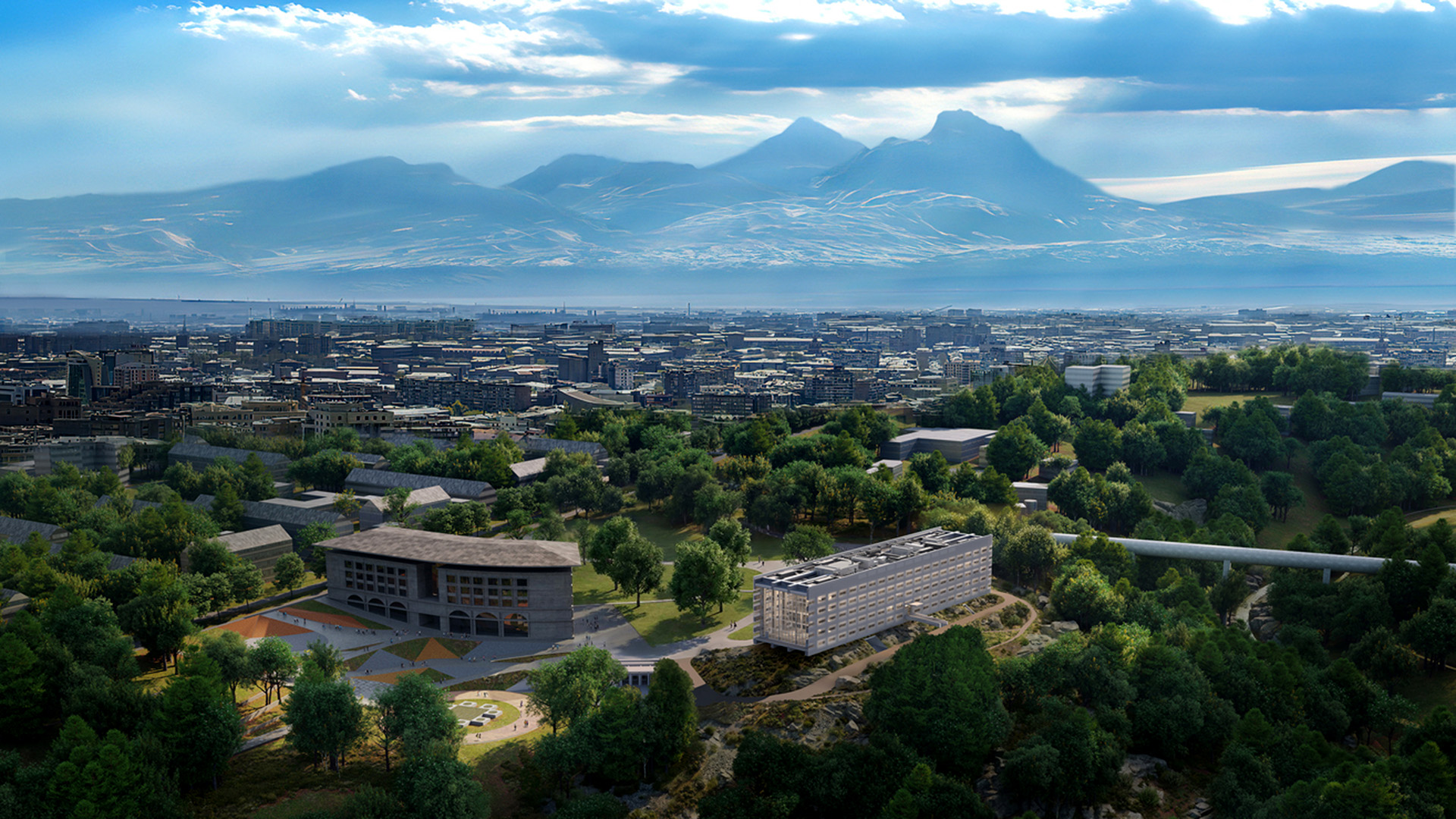
The most talked-about architectural project in Armenia right now is the EU TUMO Convergence Center, designed by Dutch firm MVRDV. The groundbreaking ceremony took place on 24 February 2026, attended by Prime Minister Nikol Pashinyan – the project is currently in its initial construction phase. The five-storey, 18,000 sqm building is positioned on the steep bank of the Hrazdan River and cantilevers 120 metres over the slope, offering direct views of Mount Ararat. The structure brings together free technology and creative education spaces for young people (including a branch of the 42 Paris programming school), co-working areas, applied research labs, start-up incubators and a conference centre – all organised around three full-height atria. Co-financed by the European Union, the project adheres to EU sustainability standards through dual climate systems and low-temperature underfloor heating.
2. Skyline Yerevan – Laguarda.Low + Arup (foundation laid 2025)
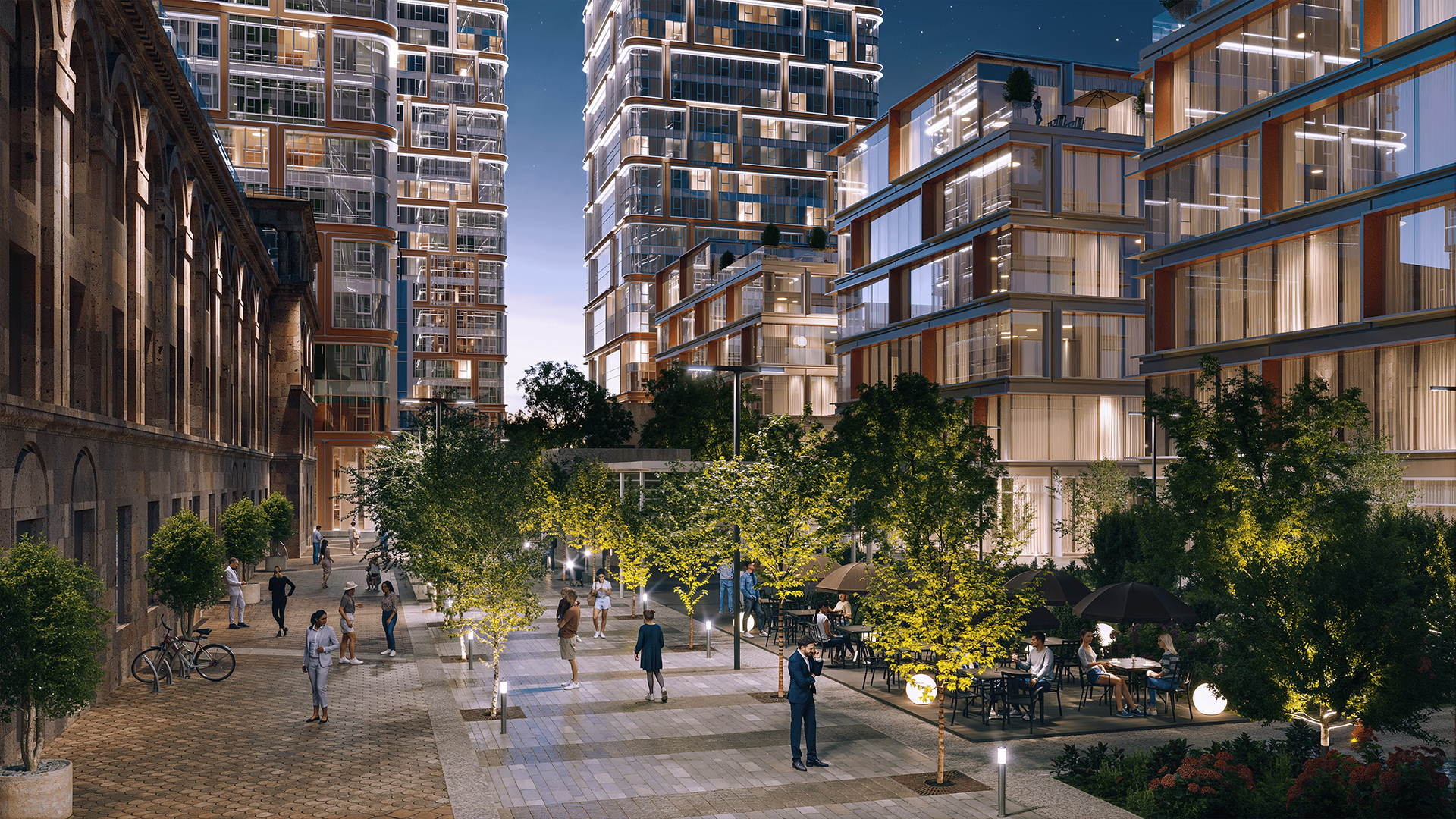
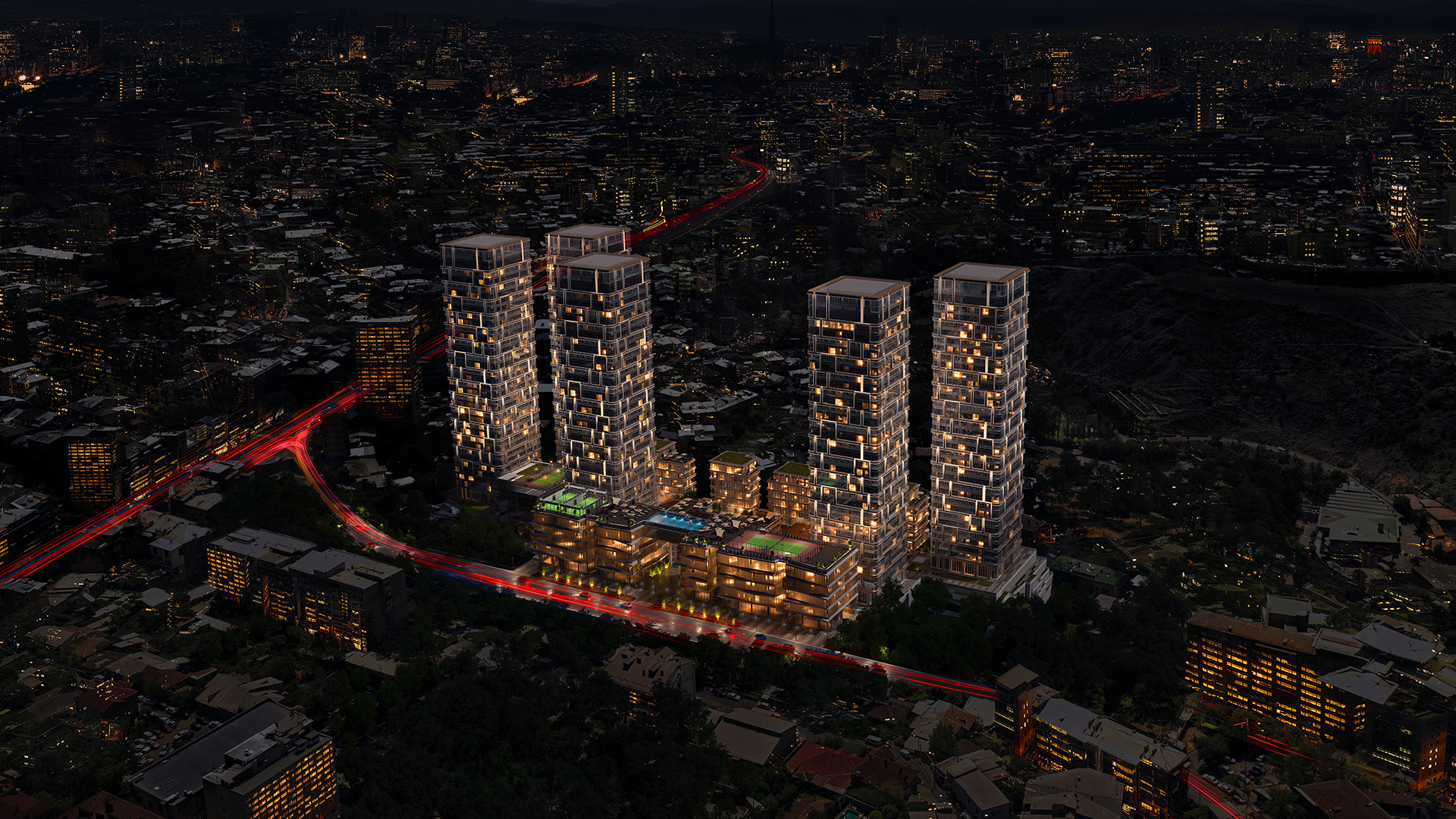
Skyline is the most ambitious mixed-use private development in Armenian history: 250,000 sqm of buildable area at the intersection of Baghramyan Avenue and Orbeli Street, in the heart of the capital. Developer Renshin Urban Investments assembled a top-tier international team: Laguarda.Low (New York) for masterplan architecture and facades, Arup (London) for structural engineering of the high-rise tower, and 1508 London for interior design of the apartments. The foundation was laid in June 2025 in the presence of municipal authorities. Main construction phase: 2026-2027, completion: December 2028.
The programme includes five 35-storey towers, an international school, children’s centre, medical clinic, hotels, restaurants and retail – a “city within a city” model that changes the typology of urban development in Armenia. The project is pursuing BREEAM or LEED certification, currently under confirmation.
3. Yerevan Downtown – Noragyugh District Regeneration (approved January 2026)
The most ambitious urban regeneration project ever announced in Armenia received government approval on 29 January 2026: the transformation of the Noragyugh district into a new international business and residential centre known as Yerevan Downtown. Target area: 83.9 hectares. The programme calls for 155 buildings for approximately 65,000 residents, plus skyscrapers of up to 70 storeys, headquarters for banks, international organisations, diplomatic missions, an international cultural centre, schools, kindergartens and large parks. The project will be implemented over 10 years and aims to relieve pressure from Yerevan’s historic city centre.
Georgia: Infrastructure, Towers and Historic Regeneration
4. Cityzen Tower – Zaha Hadid Architects (announced, completion 2028)
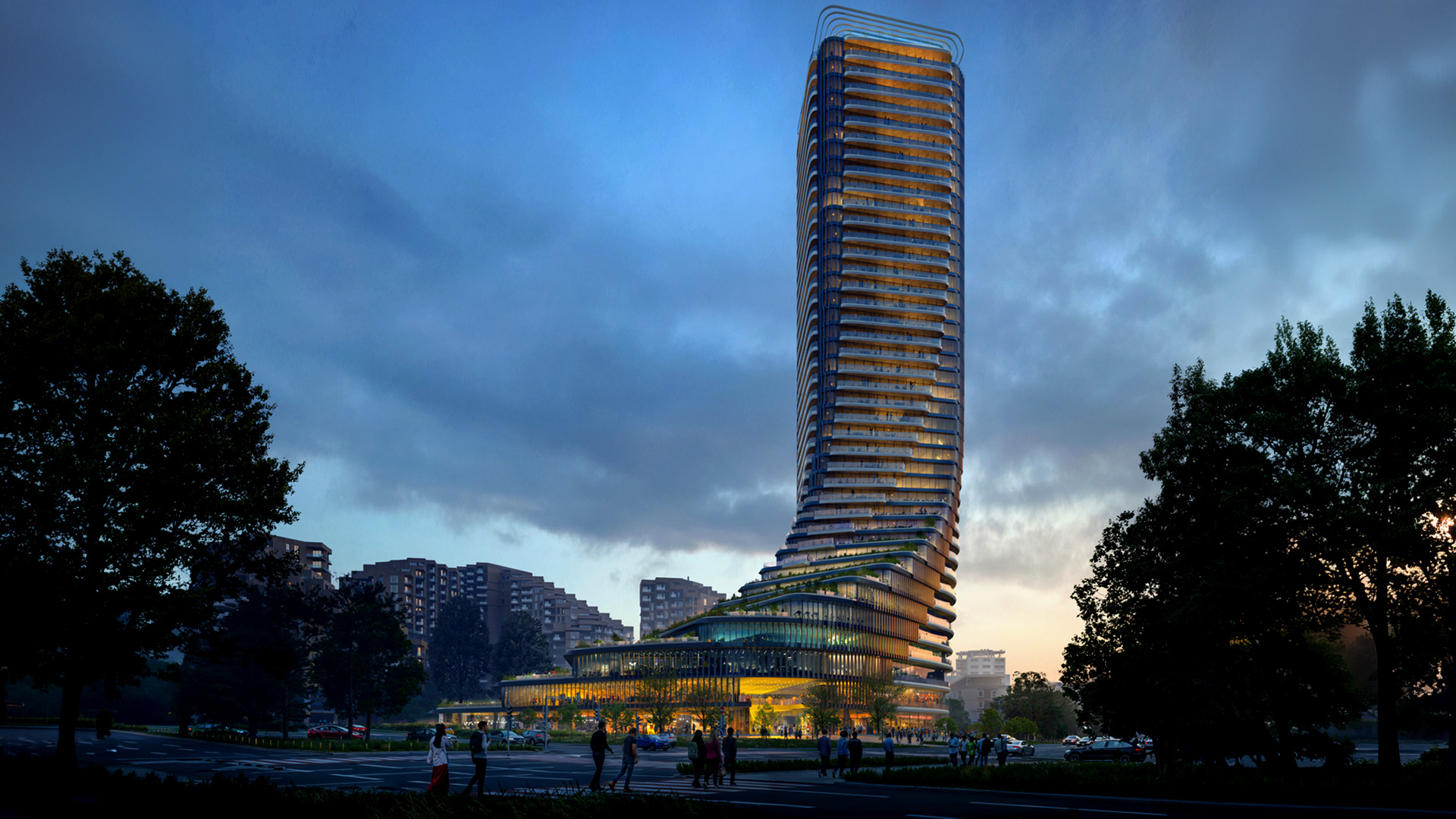
Cityzen Tower is the first project by Zaha Hadid Architects in Georgia – and one of the most widely discussed projects in the Caucasus. The 42-storey, 57,000 sqm tower will be located in the Saburtalo district, on the site of the former Soviet army headquarters, adjacent to Central Park. The project integrates residential apartments, offices, retail and restaurants across cascading green terraces conceived as a vertical extension of the park. Targeting LEED Gold certification, the tower will use natural ventilation, solar shading, local materials and rainwater harvesting. Expected completion: 2028.
5. MAQRO City Tbilisi – Construction Started in 2025
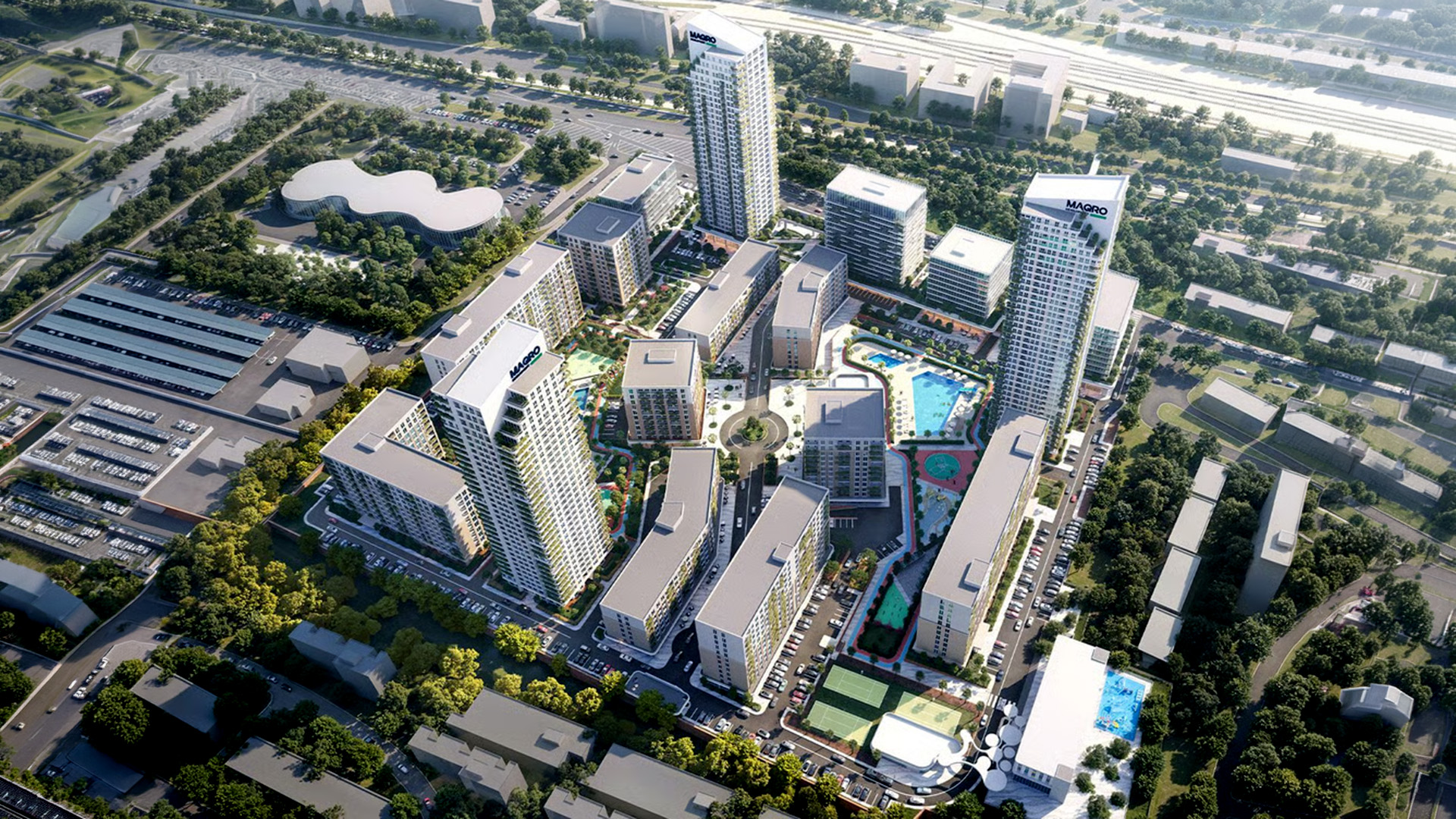
One of the largest active construction sites in Tbilisi is MAQRO City, a “city within a city” development on Noe Ramishvili Street, close to the metro and Tbilisi International Airport. Construction officially launched in 2025. Project scale: 17 buildings across 100,000 sqm of land, comprising 4,000 apartments, retail space, a business centre and the first internationally branded hotel integrated within a Georgian residential complex – Movenpick Living (240 rooms). Approximately 5 hectares will be allocated to green areas, four swimming pools, cycling lanes and sports courts. At the first sales phase, 70% of apartments were purchased for investment purposes.
6. Didi Dighomi-Didube Tram Line and Metro Line 3 (2026)
Tbilisi is investing heavily in urban mobility with two large-scale infrastructure projects. The first modern tram line will connect the Didi Dighomi district with Didube metro station: 7.5 km, 11 stops, budget of GEL 416 million (~EUR 140 million), execution period 36 months. Simultaneously, the City Hall has announced construction of Metro Line 3 (Didube-Rustaveli, via Saburtalo and Vake): 8.5 km, with an allocation of USD 40 million in 2026 and USD 70 million/year in 2027 and 2028.
7. Historic Tbilisi Regeneration – New Phases in 2025-2026
Tbilisi has the most consistent urban rehabilitation programme in the Caucasus, systematically run by the Tbilisi Development Fund through the New Tbilisi project, launched in 2015. The programme has already rehabilitated entire sections of the Old City, and enters a major new phase in 2026.
Under construction and in rehabilitation in 2025-2026:
Rustaveli Boulevard enters renovation in 2026: works lasting 4 months, allocated budget GEL 50 million (~USD 18.5 million) – roadway, pavements, underground infrastructure and facades.
Sulkhan-Saba Orbeliani and Ingorokva Streets – integrated street-and-adjacent-buildings project, currently being launched.
Dilapidated Buildings Replacement Programme (2026): the City Hall directly purchases degraded properties in protected historic zones at market price, requiring preservation of the area’s architectural character. The first systematic urban-heritage regeneration mechanism at this scale in Georgia.
Tourism Infrastructure: A Second Construction Engine
Tourism is the second major driver of construction activity in Armenia and Georgia – and the fastest generator of demand for hotel architecture, resort design, public space development and premium finishing materials.
Armenia: 23 Brand Hotels in Pipeline, National Strategy to 2030
Armenia recorded 2.26 million international arrivals in 2025 (exact figure: 2,263,642) – +2.5% versus 2024 and +19.4% above 2019 levels (source: Armenpress). In January 2026, the government adopted the Tourism Strategy 2026-2030, targeting 3 million tourists/year and USD 3.8 billion in annual tourism spending by 2030.
Public funding comes from two directions: the World Bank USD 100 million programme (2025-2029) active across seven regions (Areni, Dilijan, Dvin, Gyumri, Jermuk, Goris, Yeghegis) and a EBRD/IBRD EUR 120 million programme for specialised tourism clusters.
Private investment: pipeline of 23 internationally branded hotel projects, ~2,700 new keys. Brands engaged: Accor (7), Hilton (3), IHG (3), Hyatt (2), Wyndham (2), Marriott (1). Key hubs: Dilijan (5 projects, ~740 keys) and Tsaghkadzor (5 projects, ~550 keys). Imminent openings: Movenpick Resort Tsaghkadzor (198 keys) – 2026; Wyndham Grand Tsaghkadzor – May 2026.
Georgia: Ambassadori Island Batumi – The Most Spectacular Tourism Project in the Caucasus
Georgia recorded tourism revenues of USD 4.69 billion in 2025 (+6% vs 2024) (source: National Bank of Georgia).
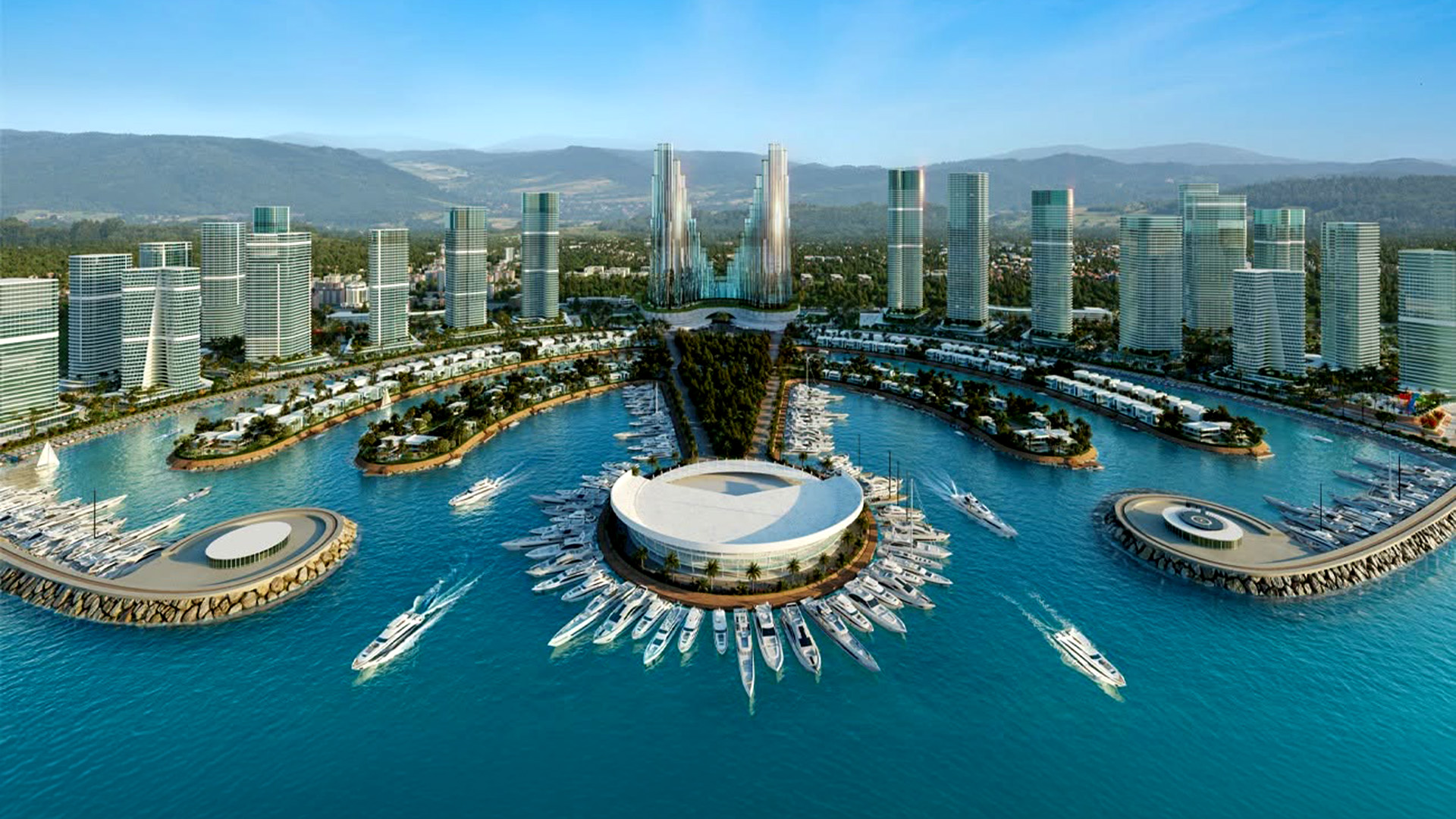
The flagship project is Ambassadori Island Batumi – an 84-hectare artificial island in the Black Sea, with 49% of its area dedicated to parks and leisure. By end 2025, 26 hectares (the first peninsula) were officially handed over. Vertical construction started in September 2025 with over 10 towers. The first tower – designed by SHoP Architects (New York) – will have 1,350 apartments across 58 floors; completion 2029, full project 2035. Presented at MIPIM Cannes, March 2026, with a smart-city-on-water vision developed with Arup (London). At completion: USD 65 million annually in taxes and 20,000 jobs.
Legislation, BIM and European Standards
Armenia: EU Accession Law + 100% Online Permits Since January 2025
Armenia passed a landmark law formally launching its EU accession process, adopted by Parliament on 26 March 2025 and signed into force on 4 April 2025. For the construction sector, this has an immediate practical effect: projects must progressively align with EU technical regulations and standards, reducing long-term regulatory risk for international investors and creating structured demand for European norms – including Eurocodes, EN product standards and ISO 19650.
On the administrative side, all permit applications – building permits, completion certificates, occupancy approvals – have been submitted exclusively online since 1 January 2025 through the urban.e-gov.am platform, launched by the Urban Development Committee. The system integrates automated checks with national registries and issues permits with official digital signatures. No formal BIM mandate exists yet, but the digital permitting infrastructure is the natural precursor to one.
What Already Applies Through European Financing
Regardless of each country formal accession status, any project co-financed by the EU, EBRD or World Bank in the region already operates within a European standards framework in practice. Three instruments define this orbit. First, the ISO 19650 series – the international BIM standard – is de facto required on projects with international financing: Germany, France, the Netherlands and the Nordic countries have embedded it in their national procurement policies, and EBRD and World Bank project documentation increasingly references it. Second, EU Directive 2014/24/EU on public procurement authorises member states to require BIM on public works contracts (Article 22(4)); a new EU Public Procurement Act is currently in legislative process, with a Commission proposal expected in Q2 2026. Third, EN Eurocodes 2.0 – the second generation of structural design standards: all 74 parts distributed to national standards bodies by 30 March 2026, national implementation deadline 30 September 2027, mandatory withdrawal of the first generation by 30 March 2028. In Georgia, the EU-Georgia DCFTA (in force since 2016) requires public procurement procedures compatible with EU thresholds – updated to EUR 140,000 for central government supply and service contracts as of 1 January 2026 – independently of the current political accession freeze.
Practical takeaway: The Caucasus is in the pre-mandate phase for BIM at national level, but already in the standards orbit in practice for any project with EU, EBRD or World Bank financing. Architects, engineers and suppliers with ISO 19650 workflows and Eurocode 2.0-compliant design processes have a concrete competitive advantage – and the window before local competitors catch up is narrowing.
Construction Demand: Materials, Systems and Specialisations Needed
The volume and diversity of projects in Armenia and Georgia in 2025-2026 generate active demand across multiple segments: large glazed curtain wall systems and ventilated facades for high-rise towers, premium finishing materials for the luxury residential segment, HVAC and renewable energy solutions required by LEED and BREEAM certifications, specialist structures for construction on difficult terrain and steep slopes, and heritage-compatible restoration materials.
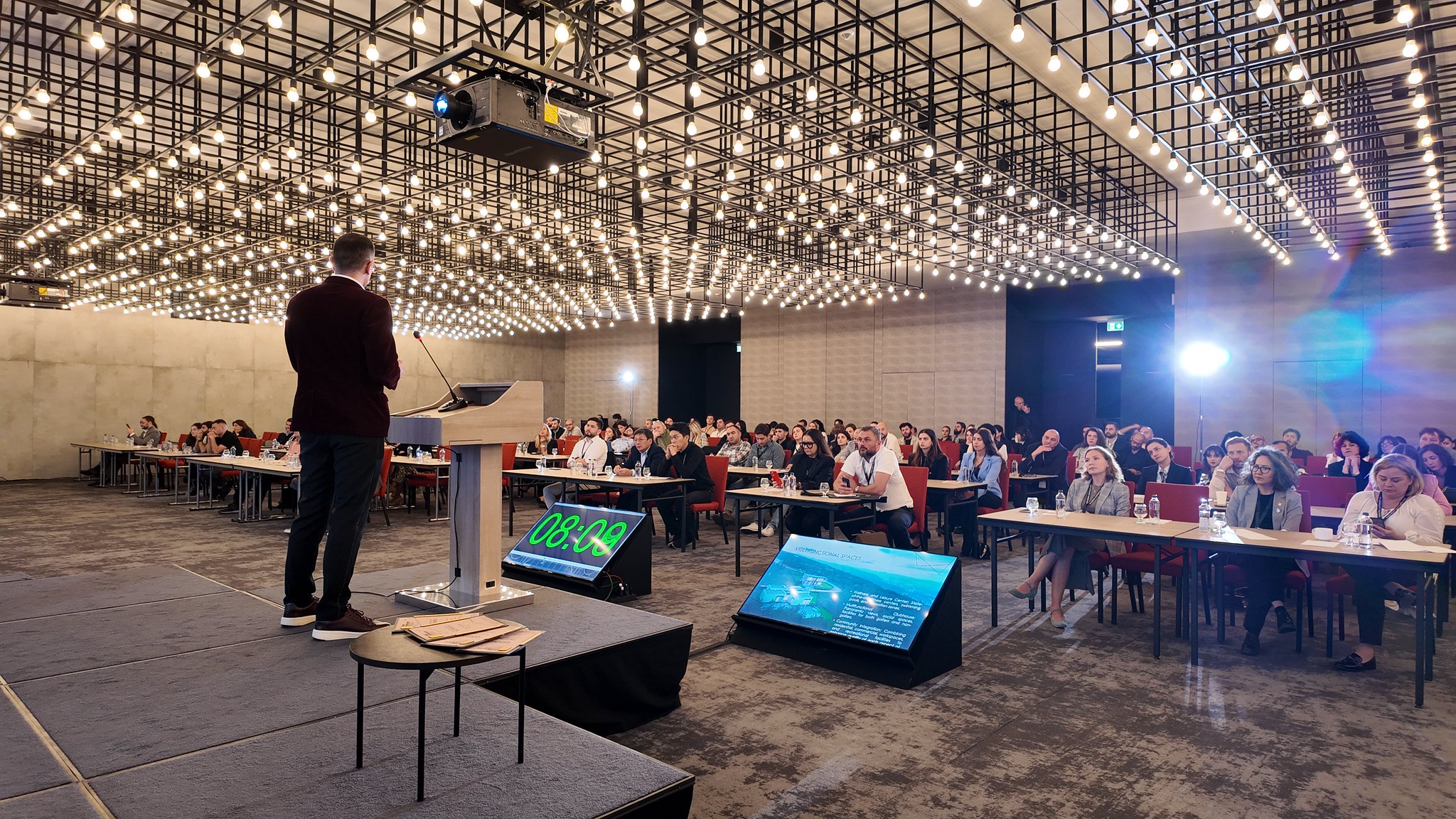
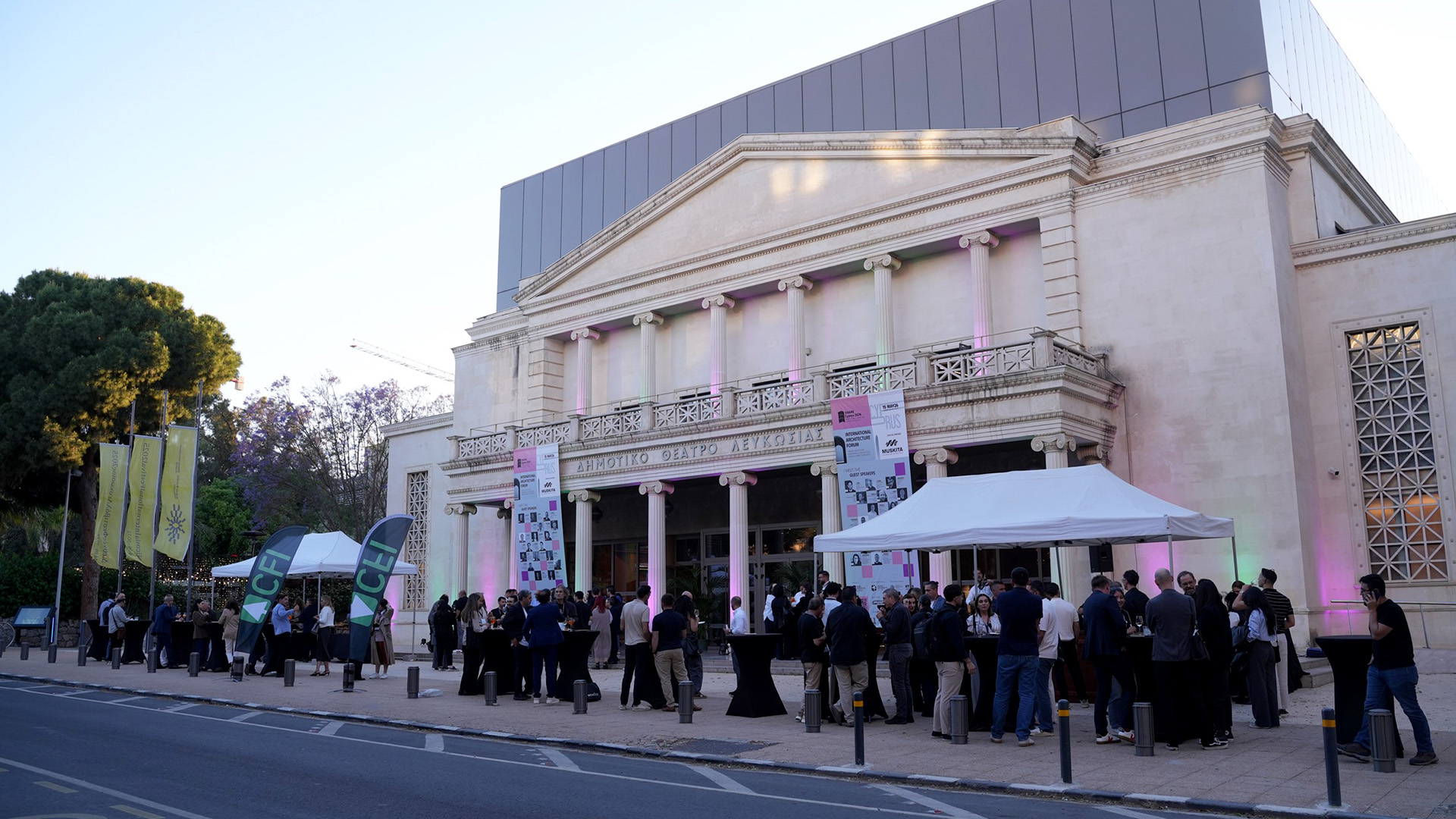
Attending the Caucasus events organised by share-architects.com provides access to the professional community active in this market – architects, contractors, developers and local authorities operating in Armenia and Georgia – at a moment when the market is open and the competition for positioning has barely begun.