
For more than a decade, Aluprof has been a valued part of the SHARE Architects community, supporting the exchange of ideas across countries and design cultures. In this interview, Sabina Gustof, Business Development Manager at Aluprof, explains how this long-standing partnership encourages innovation, sustainability, and project-specific solutions — and how Aluprof is responding to key directions in contemporary architecture, from adaptive reuse and wellbeing to BIM and integrated façade technologies.
In 2026, Aluprof experts will continue to engage with the SHARE community in different countries.
Aluprof has been supporting the SHARE Architects community for over eight years. How has this ongoing dialogue with architects contributed to the development of innovative and sustainable solutions within Aluprof’s portfolio?
This question is so important to me because it describes a kind of collaboration between us we’ve been engaging in for more than a decade now. On the Romanian market, this partnership has lasted for even more than a decade. With the SHARE Architects community, we have the unique opportunity to work with architects from different countries and integrate their perspectives, their aspirations, and theirissues with ours, to reach an outcome that reflects the best of both worlds for functionality and sustainability.
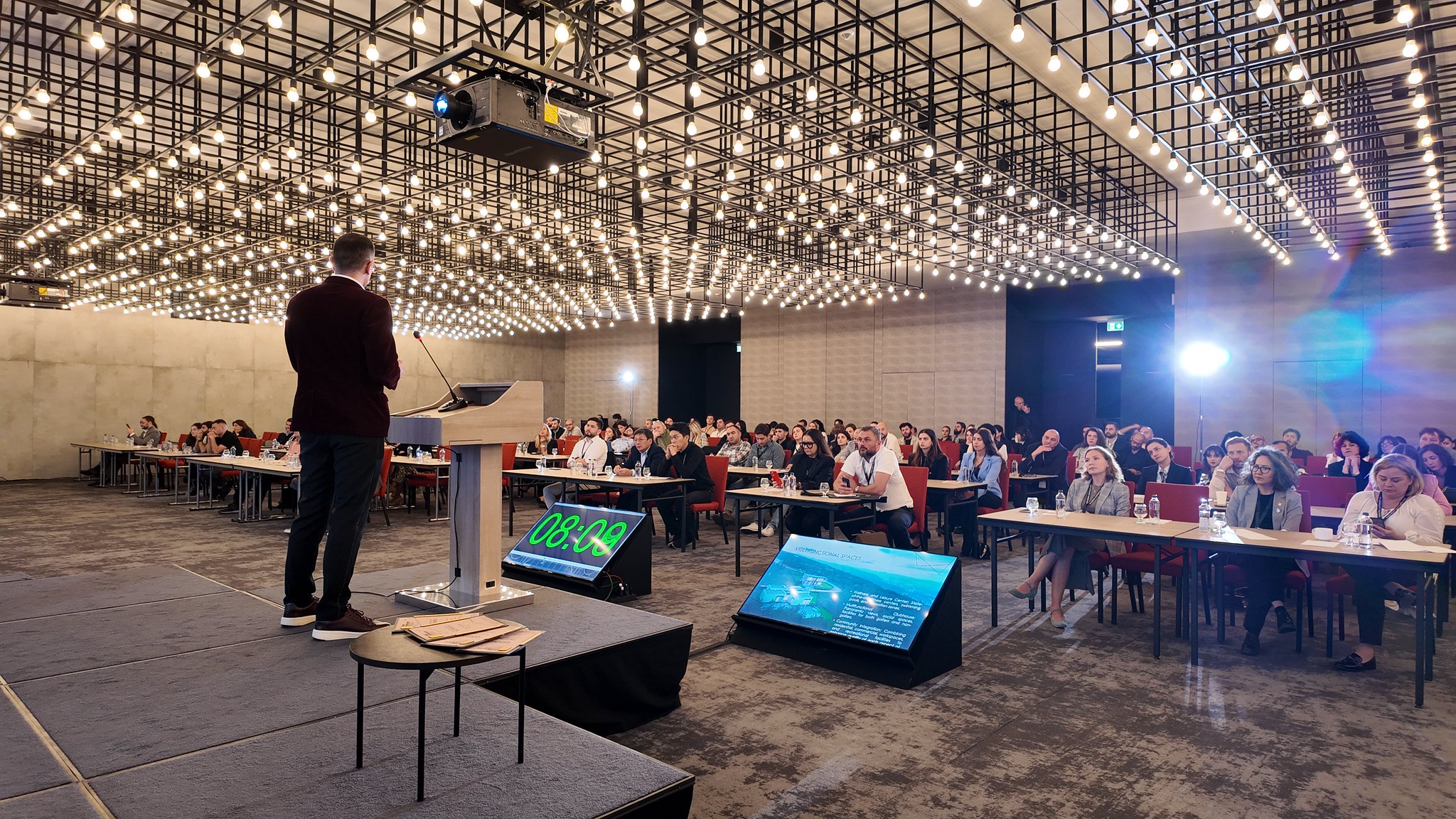
But this is not just about listening — this partnership is about inspiring. In SHARE Architects events, we present projects constructed with Aluprof systems that generate new ideas and show what is possible. We also share information about the full range of potential solutions we offer, because architects cannot be expected to have complete knowledge of the entire spectrum of building materials available.
This is where our role becomes vital: educators, advisers, and supporters in choosing the best systems for each project. Many of our flagship products — ranging from energy-efficient curtain walls and panoramic sliding doors to sunshade solutions integrated with façades and even low-carbon aluminum profiles — are a testament to both architects’ ingenuity and the sustainability goals shaping contemporary architecture today.
Architects are increasingly seeking flexibility and design freedom. How do Aluprof’s latest systems support architectural creativity while meeting high sustainability and performance standards?
Let’s start with the fact that Aluprof’s window, door, façade, and sun-shading systems are made of aluminium. This material is the foundation of our solutions, offering a unique combination of lightness and strength that enables large-scale constructions with slim profiles while maintaining excellent thermal, acoustic, and structural performance.
Aluminium is also very durable and resistant to weather and corrosion which helps maintain its high performance and look for a long time. And as one of the eco-friendly materials — 100% recyclable and able to be reused endlessly without losing its properties — it facilitates the circular economy and leaves a smaller environmental footprint.
Aluprof engineers not only create our standard systems but more often customize systems adapted to individual projects at the system level so that architects’ visions can be translated into the best technical efficiency and aesthetics. This will allow us to combine cutting-edge engineering with customized design, to create architectural systems with the highest energy efficiency, sustainability and durability needed to satisfy the latest architectural needs.
Looking ahead to 2026 and beyond, which development directions or types of solutions do you believe will become essential for architects, and how is Aluprof preparing its portfolio to meet these future expectations?
When I look at this industry in the years ahead and talk with architects, they believe the upcoming trends—those concerned with sustainable buildings, intelligent technology, and design for relationship with nature—are sure to continue to guide the category in 2026 and far more. But I’m also seeing new priorities emerging, and one of the most significant is adaptive reuse: rethinking and repurposing existing buildings to support circular economies and reduce ecological impact.
Architects are also seeking greater flexibility within design and more adaptability, escaping more generic structures and promoting innovative, project-specific concepts. Inside, the emphasis becomes increasingly on wellbeing and health, with a greater emphasis on natural light, air quality, and acoustic comfort.
The growing focus on P-DfMA—bringing production and assembly considerations into the design process—is helping shorten construction timelines and improve overall accuracy. At the same time, BIM continues to gain momentum, becoming an increasingly essential tool in both design and delivery, thanks to the value it brings to collaboration and efficiency across the entire construction process.
Aluprof is constantly preparing for the future. We strive to create and improve the systems to suit high technical performance requirements and ambitious sustainability targets. For example, at the end of last year we launched the MB-SR50N PV façade with an integrated photovoltaic panel. We also offer one of the industry’s most comprehensive BIM libraries that we are actively developing and maintaining. Also, post-Selt acquisition we have actually one of the widest range of modern sun protection technologies among European producers. Most importantly, we are still committed to meeting architects’ needs with custom solutions, adjusted to every project, building to each architect’s vision. The main goal for us is to create better architecture.